What Is the Difference Between an Infrared Sauna and a Traditional Sauna?
|
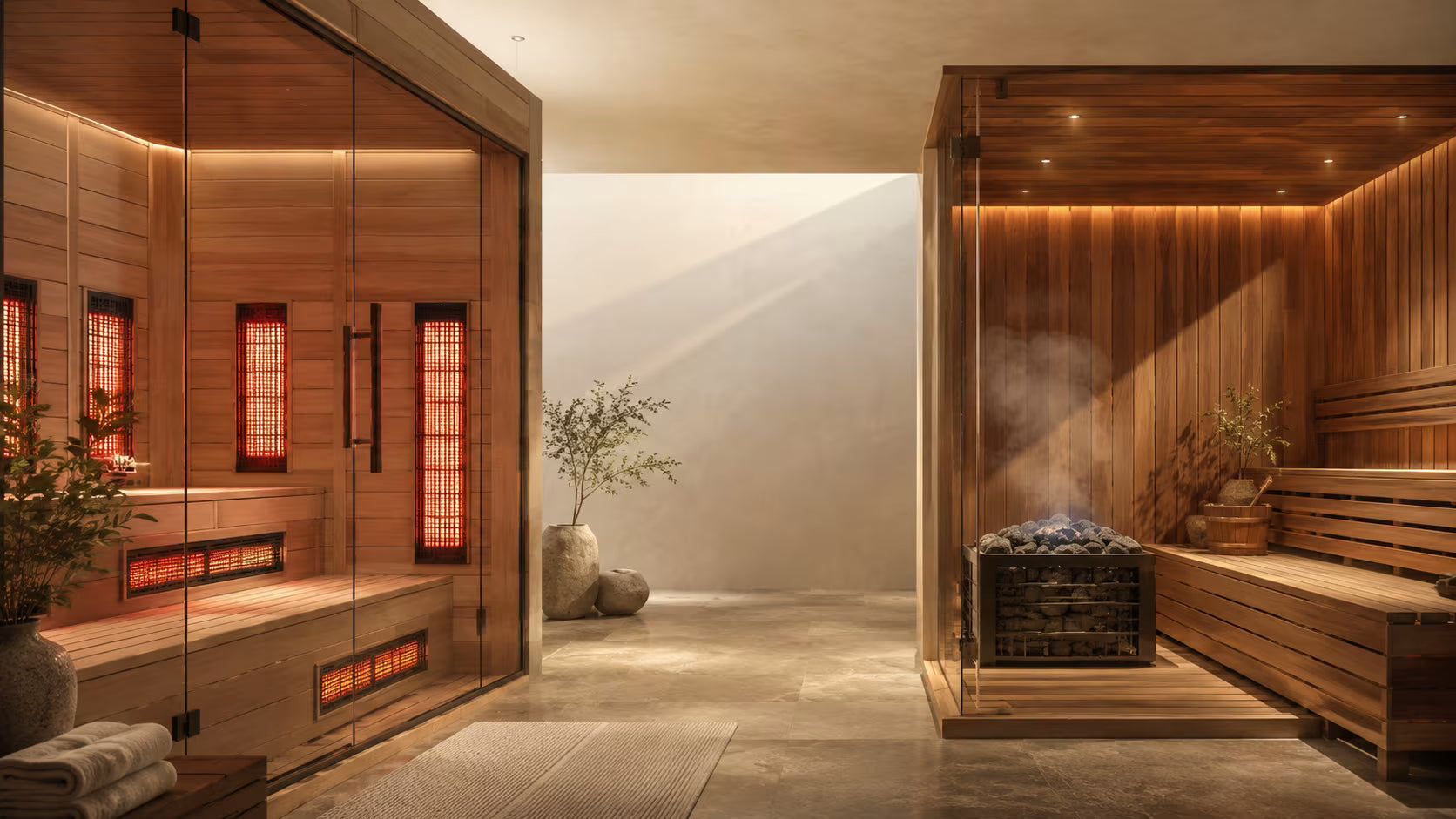
Quick answer: An infrared sauna uses heating panels inside the cabin, while a traditional sauna uses a heater or stove, often with sauna stones, to heat the room. Neither system is automatically better. Choose according to the heat experience you prefer and the dimensions, electrical service, environment rating, ventilation, and clearances your home can support. |
Both sauna types create a heated environment, but the way they produce heat changes the operating temperature, utility requirements, placement options, and feel of a session. Start with the heating system, then verify the specification sheet and installation manual for the exact model.
Infrared vs. traditional sauna at a glance
|
Decision factor |
Infrared sauna |
Traditional sauna |
|
Heating method |
Infrared panels inside the cabin |
Heater or stove, commonly paired with sauna stones |
|
Typical experience |
Radiant dry heat; many models operate at a lower air temperature |
Hotter room-air experience; configuration depends on the heater and model |
|
Electrical planning |
Voltage, wattage, circuit, and connection vary by model |
Often a higher-capacity electrical installation, but the exact requirement is model-specific |
|
Placement |
Indoor models are common; use only in the environment listed by the manufacturer |
Indoor and outdoor configurations exist; moisture, heater, and clearance requirements must be followed |
How does an infrared sauna work?
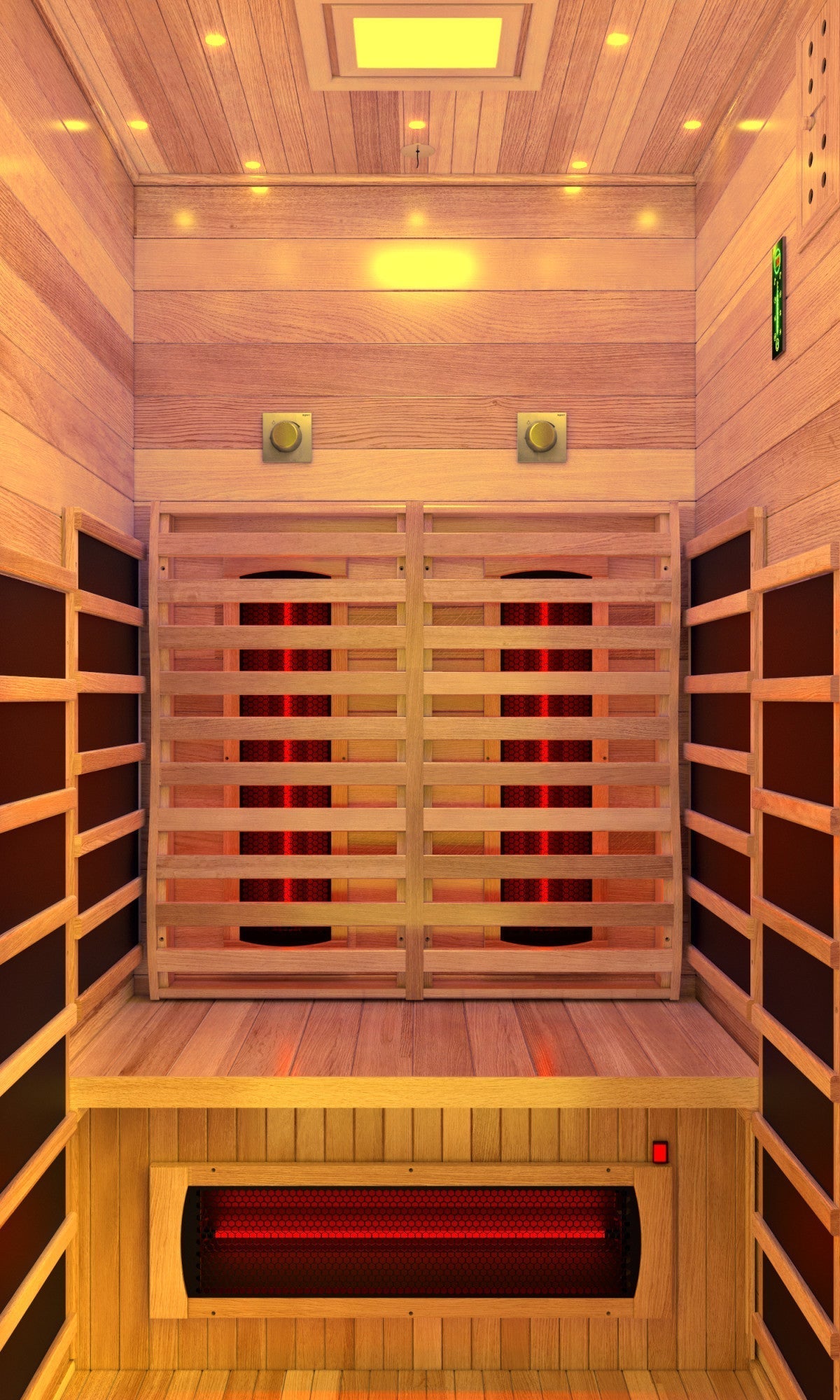
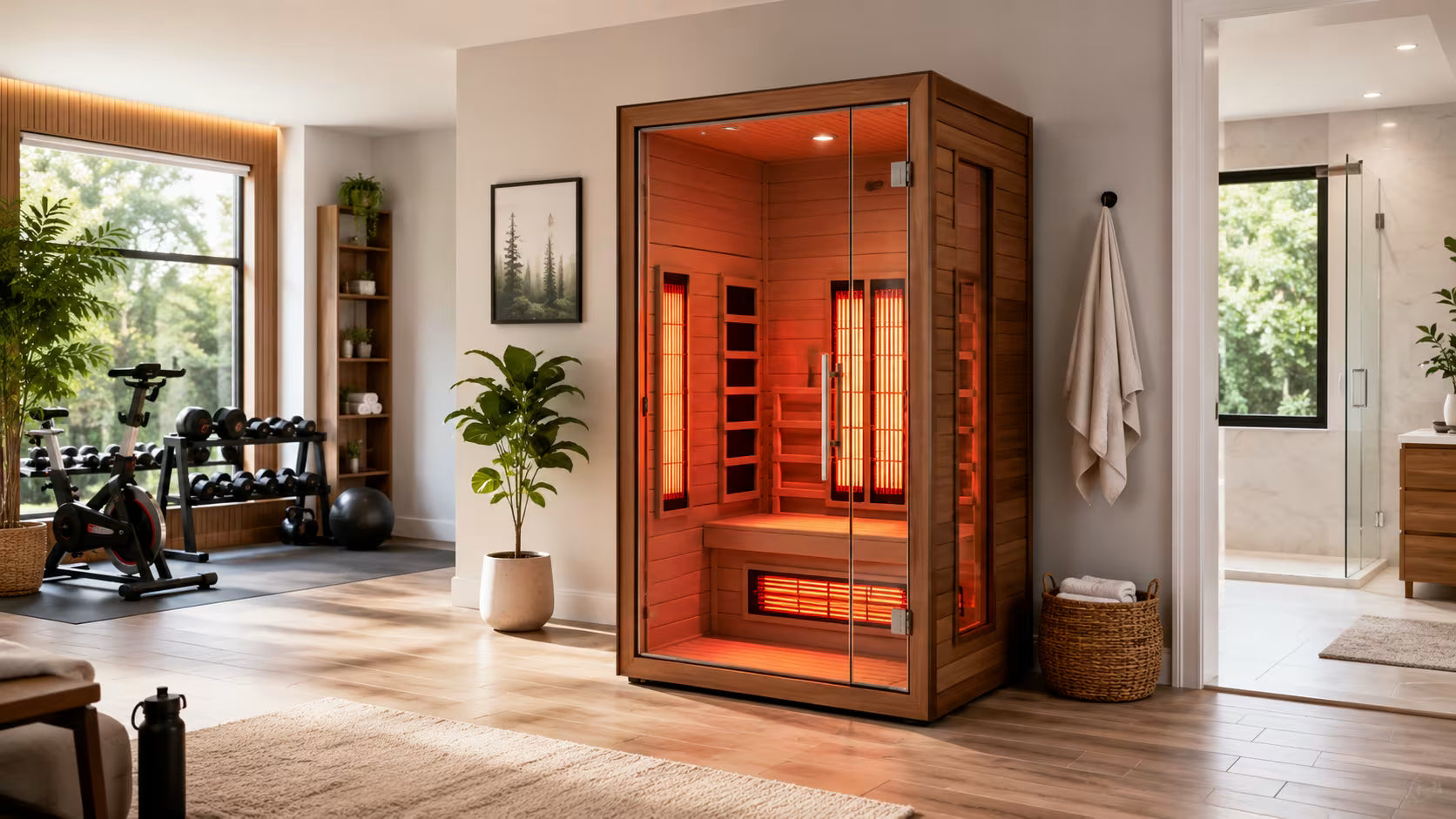
An infrared sauna uses heating panels positioned around the cabin rather than relying on a traditional sauna stove. Depending on the model, the cabin may use far-infrared, full-spectrum, or another panel configuration. Temperature range, panel placement, power level, controls, and included features vary.
Do not choose an infrared sauna by appearance or seating label alone. Compare the actual heating technology, exterior and interior dimensions, temperature settings, wattage, voltage, circuit or plug requirements, ventilation, and installation instructions.
How does a traditional sauna work?
A traditional sauna uses a heater or stove to warm the sauna environment. A common residential configuration includes an electric rock heater and sauna stones. That system creates a different heat experience and installation profile from infrared panels.
Some traditional models are designed for dry use, while selected rock-heater installations may permit water on the stones when the manual allows it. Never assume a model supports wet use. Follow the heater and sauna instructions for the exact configuration.
Is an infrared sauna cooler than a traditional sauna?
It can be, but the exact temperature depends on the model. In the product examples reviewed for this guide, the SaunaSpa Fiji indoor infrared model lists a maximum temperature of 149°F. The SaunaSpa SSOT04 outdoor rock-heater model lists a set range of 158°F to 194°F.
Those figures illustrate two current configurations; they are not universal ranges for every infrared or traditional sauna. Confirm the minimum and maximum temperature in the current product documentation before comparing models.
- Minimum and maximum temperature
- Heating technology and heater output
- Voltage, wattage, circuit, and connection
- Indoor or outdoor rating
- Cabin and bench dimensions
- Ventilation, moisture, and clearance requirements
- Installation, assembly, and service instructions
Do the electrical requirements differ?
Yes, and the difference can be significant. One indoor infrared example reviewed for this guide is listed for 110–120V operation, while the outdoor traditional example is listed at 240V. That does not mean every infrared sauna uses a standard household connection or every traditional sauna uses the same higher-voltage setup.
|
Planning rule: Never design the electrical installation from the words “infrared” or “traditional.” Use the exact model's voltage, wattage, circuit, plug or hardwire instructions, and local requirements. A qualified electrician should complete any required electrical work. |
Which type is better for indoor home use?
There is no universal winner. An indoor infrared cabin can be a practical choice when you want a self-contained product and its size, electrical requirements, ventilation, and clearances work with the room. A traditional sauna may be the better fit when you specifically prefer a rock-heater experience and the proposed location supports the heater, moisture conditions, electrical service, ventilation, and manufacturer-required clearances.
A more useful question than “Which type is better?” is: “Which sauna fits the experience I want and the room, utilities, delivery path, and installation conditions available in my home?”
Eight factors to compare before choosing
1. Heating system
Determine whether the model uses infrared panels, a rock heater, or a hybrid configuration. This is the core difference between the two categories.
2. Temperature range
Check the actual minimum and maximum settings. Do not apply one brand or model's range to an entire sauna category.
3. Electrical requirements
Review voltage, wattage, circuit, plug or hardwire requirements, cord location, and the current installation manual before selecting the room.
4. Indoor or outdoor rating
Use the sauna only in the environment for which it is designed. A roof or covered patio does not convert an indoor-only cabin into an outdoor-rated product.
5. Exterior and interior dimensions
Measure the full cabin, bench area, ceiling height, door movement, required wall clearance, ventilation space, and service access.
6. Delivery and assembly
Confirm that panels and components can move through exterior doors, hallways, corners, stairs, elevators, and the final assembly area.
7. Ventilation and clearance
Follow the exact manual. Generic clearance advice may conflict with the selected sauna's ventilation, heater, assembly, or maintenance requirements.
8. Controls and included features
Compare controls, lighting, audio, ventilation, removable seating, and other cabin equipment only after the installation-critical specifications have been confirmed.
Sauna and steam shower are not interchangeable terms
A standard infrared sauna is a dry-heat cabin and does not use a steam generator. A traditional rock-heater sauna is also different from a sealed steam shower. If the project is a steam shower rather than a sauna cabin, use the sizing, enclosure, material, and installation instructions for the selected steam system instead of applying sauna guidance.
Frequently asked questions
Does an infrared sauna use steam?
A standard infrared cabin uses dry radiant heat rather than a steam generator. Hybrid products can differ, so verify the exact model.
Which gets hotter?
Many traditional rock-heater saunas operate at higher room temperatures than infrared cabins, but the actual range is model-specific.
Can I install an infrared sauna indoors?
Yes, when the model is listed for indoor use and the room meets its dimensions, floor, electrical, ventilation, clearance, and assembly requirements.
Can an indoor sauna go outside under a roof?
Only when the product documentation explicitly approves outdoor installation. Covered exterior space is still an outdoor environment.
Does infrared always use less electricity?
No universal rule applies. Compare voltage, wattage, circuit, warm-up instructions, and intended use for the exact models.
Choosing the right sauna starts with your home
Infrared versus traditional is an important comparison, but heating technology should not be the only decision. Confirm the location, dimensions, delivery route, electrical service, indoor or outdoor rating, ventilation, clearance, and service access first. Then compare temperature, capacity, controls, materials, and comfort features.
The best sauna is the one whose heat experience and installation requirements fit both your preferences and your home.
Article sources
SaunaSpa Fiji SC-SS0011-0S product page | SaunaSpa SC-SS0023-2P product page
SaunaSpa indoor sauna collection | SaunaSpa outdoor sauna collection | SaunaSpa home